
Why concerns about the end of net metering are largely unfounded
When Dutch net metering (salderingsregeling) ends, attention mainly goes to what feeding electricity back into the grid will still earn from 2027. Yet how much of their solar power residents use themselves, as it is generated, matters too. That largely determines how much they notice the change.
How do you give residents clarity?
If you work at an energy advice desk, you will know them: questions from residents with solar panels about the end of net metering, such as:
- Will my panels end up costing me money?
- Should I have bought them at all?
- Should I hurry to buy a home battery now?
Confident answers are circulating in the media and in advertisements, and they sometimes contradict each other. For an energy advice desk or a policy officer, that is difficult: you want to give residents clarity, but as a municipality you also want to stay neutral and not promote any product or supplier.
At De Duurzame Oplossing, we calculate each home hour by hour, over all 8,760 hours of a year. In that calculation, we use household consumption profiles: when people shower, cook or charge a car. That shows us when solar panels generate electricity and when residents use it. From 1 January 2027, how well those two coincide mainly determines how much residents notice the end of net metering.
This article explains what changes on 1 January 2027 and which concerns are justified and which are not. It also sets out which factual messages you can safely pass on to residents.
What changes on 1 January 2027?
On 1 January 2027, net metering ends in one go, with no phase-out period. From then on:
- Residents can no longer offset the electricity they feed back into the grid against the electricity they draw from it.
- Instead, they receive feed-in compensation from their energy supplier for every kilowatt-hour they feed back.
- If a household buys electricity from and feeds it back to the same supplier, then until 1 January 2030 that compensation must be at least half of the supply rate before taxes.
- The compensation must always be reasonable and, for households, must not be negative when averaged over a month.
The scheme was introduced in 2004 as a temporary incentive, when solar panels were barely profitable. According to the Netherlands Authority for Consumers and Markets (ACM), investing in solar panels now pays off even without the scheme. Its end has been in law since January 2025.
Something else also played a part in ending the scheme. Solar power is mainly fed back when the sun is shining, which is when electricity is worth little on the market. With net metering, that electricity, up to the household's own annual consumption, is still offset at the full rate, including energy tax. As a result, the government misses out on tax revenue.
Will solar panels cost residents money from 2027?
As a rule, no: the panels keep generating electricity, and every kilowatt-hour residents use at the moment the panels generate it is one they do not have to buy. What does change is that electricity fed back into the grid earns less.
Feed-in charges are changing too: what suppliers charge for feeding back. Almost all suppliers already charge them on fixed and variable contracts. From 2027, that is allowed only for costs that genuinely relate to feeding back.
The table below sets out both changes.
| Aspect | Until the end of 2026 | From 2027 |
|---|---|---|
| Electricity fed back | Offset against electricity drawn from the grid, up to the household's own annual consumption | Feed-in compensation per kilowatt-hour |
| Value per kilowatt-hour | The full rate, including energy tax, up to the household's own annual consumption | Until 1 January 2030 at least half of the supply rate before taxes, if the household buys from and feeds back to the same supplier; always reasonable and, for households, not negative when averaged over a month |
| Feed-in charges | Charged by almost all suppliers on a fixed or variable contract; since 2026 shown as an amount per kilowatt-hour | Allowed only for costs that genuinely relate to feeding back |
Based on the sources of this article (see Sources).
With a small number of suppliers, feeding back can cost money from 2027. The law protects only the compensation: for households, it must not be negative when averaged over a month. That rule says nothing about the charges. If the charges are higher than the compensation, residents pay extra for every kilowatt-hour they feed back.
The law does not say in so many words whether that is allowed. According to the ACM, it is not prohibited from 2027 either, nor unreasonable in itself. The ACM will, however, continue to monitor whether rates are reasonable after 1 January 2027. According to Minister Hermans of Climate and Green Growth, the government cannot prevent suppliers from passing on costs they actually incur without breaching the European Electricity Directive.
So it pays for residents to look at the net feed-in compensation in their contract: the compensation minus the feed-in charges.
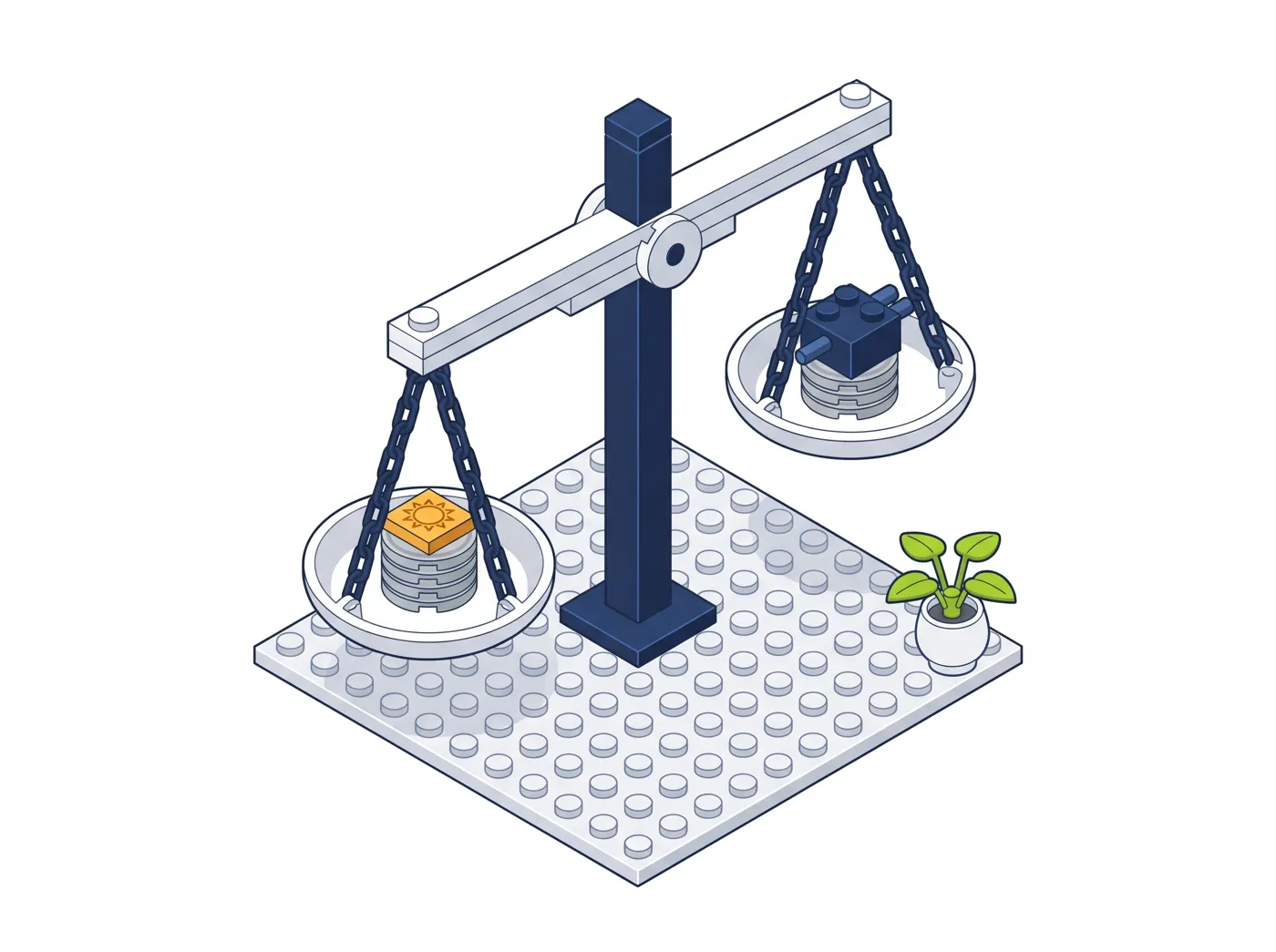
Why the time of use matters
Whether residents notice the end of net metering therefore depends mainly on how much of their solar power they use themselves, as it is generated. As long as net metering exists, it makes little difference when electricity is used, because electricity fed back is offset over the year against the electricity the residents draw from the grid. From 2027, the solar power residents use at the moment it is generated is worth the most.
Consumption and generation often do not coincide. In most households, electricity use is concentrated in the morning, the evening and in winter. Solar panels, by contrast, generate mostly during the day and in summer: April to September together account for about 70 to 75% of their annual yield. Whatever residents do not use directly goes into the grid. It is precisely that part that earns less from 2027.
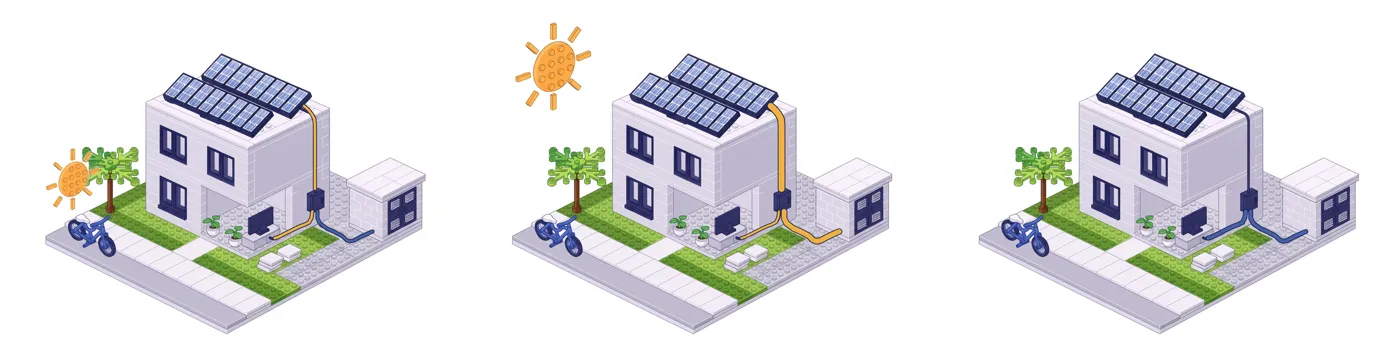
A yearly average therefore says little about any one household. How much solar power residents use directly varies from household to household: it depends on when residents are at home, when they use appliances and how much electricity the panels generate at that moment. Two households with the same solar panels can therefore use very different shares of their solar power directly. You only see that difference if you calculate hour by hour rather than from an annual total.
A few examples:
- Anyone who is at home during the day uses more solar power directly.
- An east-west roof generates slightly less electricity than a south-facing roof, but spreads it over the day, so a larger share can be used directly.
- A heat pump raises electricity use considerably, but mainly in winter, when solar panels generate little.
- Water heating, however, is needed all year round and, with a storage tank, can be scheduled for sunny hours.
The more residents feed back, the more they notice the lower compensation.
Can the investment in solar panels still pay for itself?
In most cases it can, although it takes longer. A factual analysis that the Dutch research organizations CE Delft and TNO drew up in September 2024 was commissioned by organizations including the Dutch Sustainable Energy Association (NVDE) and the trade associations Holland Solar and Energie-Nederland. For panels bought in 2027, it puts the payback period at:
- about 9 years if the scheme were to continue;
- about 12 years without the scheme, if suppliers do not charge households with solar panels for feeding back;
- about 17 years if they do.
Solar panels last about 25 years. Here too, the time of use plays a part: according to Minister Hermans, residents can shorten the longest payback period, 17 years, by using more of their own solar power directly.
The payback period is a limited measure, though. A more complete measure is the cost per kilowatt-hour over the whole lifetime: purchase, installation, maintenance and replacement of parts such as the inverter, divided by the total electricity yield in kilowatt-hours over the panels' lifetime. You can compare that cost with what the electricity is worth: the price of electricity from the grid for the part residents use directly and the net feed-in compensation for the part they feed back.
Solar panels can also improve a home's energy label (the Dutch rating of a home's energy performance). Whether that actually moves it up a class is decided by an energy performance adviser (energieprestatie-adviseur), who reassesses the home. If it does, a better label usually has a positive effect on the selling price. In recent years, homes with a good label have sold faster and fetched more. That extra value is a kind of savings pot, which residents only cash in when they sell their home.
Is a home battery the answer?
A home battery stores solar power for use later in the day, so that residents use more of their own electricity. With net metering ending, that sounds attractive. Whether it pays off varies from one situation to another, so we make no general statement about it. There is no subsidy for a home battery. What helps in any case, even without a battery, is for residents to use more of their own solar power directly.
There is also a commercial side to all the talk about home batteries right now: some of what is being written about the end of net metering comes from companies that sell home batteries.
What can you tell residents as a municipality?
All in all, you can give residents four factual messages, without promoting any product or supplier:
- Solar panels will keep generating electricity from 2027 too. Solar power that residents use directly is power they do not have to buy. What changes is that electricity fed back into the grid earns less.
- In most cases, solar panels can still pay for themselves, although it takes longer.
- The more solar power residents use directly at the moment it is generated, the less they will notice the end of net metering. So their own usage pattern is the first thing to look at, even before considering a home battery.
- It pays to look at the net feed-in compensation in the energy contract: the compensation minus the feed-in charges. With a small number of suppliers, it can be negative.
Lower returns from feeding back, no reason to panic
Concerns about the end of net metering are largely unfounded: solar panels keep generating electricity, as a rule do not cost money on balance, and in most cases can still pay for themselves. The concern that is justified is that electricity fed back into the grid earns less, and with a small number of suppliers can even cost money.
If residents come to your desk with conflicting claims, the four messages above give you a neutral answer. You could, for example, include them in the information your energy advice desk provides.
We do not sell solar panels, batteries or energy contracts ourselves. That is why we can give an independent account of where things stand.
Want to know more about the energy and heat demand of homes and neighbourhoods? Sign up for our newsletter.
Sources
Staatsblad 2025, 17 (the official journal of Dutch legislation). Wet beëindiging salderingsregeling (the act ending net metering, amending Article 2.34(7) to (9) of the Energiewet, the Dutch Energy Act): the feed-in compensation until 1 January 2030 and the requirement that it be reasonable and not negative when averaged over a month. officielebekendmakingen.nl (opens in a new tab)
Rijksoverheid (the Dutch central government). Salderingsregeling stopt in 2027. What the supply rate before taxes is. rijksoverheid.nl (opens in a new tab)
Autoriteit Consument & Markt (ACM). ACM steunt voorstel voor afbouw salderingsregeling (16 January 2023). The view that solar panels pay off even without the scheme. acm.nl (opens in a new tab)
Solar Magazine. Eigen Huis eist duidelijkheid over hoogte terugleverkosten en terugleververgoeding. That feeding back can cost money with a small number of suppliers from 2027. solarmagazine.nl (opens in a new tab)
Handelingen Eerste Kamer (the official record of Dutch Senate debates), 10 December 2024. Minister Hermans over de beëindiging van de salderingsregeling. The European Electricity Directive, the lifetime of solar panels and shortening the payback period through more direct use. officielebekendmakingen.nl (opens in a new tab)
Autoriteit Consument & Markt (ACM). Onderzoek ACM naar terugleverkosten voor zonnestroom (17 December 2025). The ACM's view that a negative net amount is not prohibited from 2027 either, nor unreasonable in itself. acm.nl (opens in a new tab)
Autoriteit Consument & Markt (ACM). Besluit vaststelling modelcontracten (12 December 2025). That the ACM cannot set maximum rates and cannot act against a negative net feed-in compensation when the compensation and the feed-in charges are both reasonable. acm.nl (opens in a new tab)
Autoriteit Consument & Markt (ACM). Energiemonitor ACM: Terugleverkosten voor huishoudens met zonnepanelen 10% omhoog (13 March 2025). That the ACM will continue to monitor whether rates are reasonable after 1 January 2027. acm.nl (opens in a new tab)
CE Delft and TNO. Feitenbasis aanpassing salderingsregeling zonne-energie (September 2024). The payback periods of 9, 12 and 17 years. energie-nederland.nl (opens in a new tab)
What does the end of net metering mean for the homes in your municipality?
We calculate for each home, hour by hour, how much solar power is used directly and what that yields, including for a whole neighbourhood. That shows you what the end of net metering means for your residents.
Request a conversation